Many see a pile of old tires and think “waste.” But for savvy entrepreneurs, it’s a goldmine of opportunity. The magic lies in transforming those tires into high-value crumb rubber. But how exactly does a massive, tough tire become a fine, versatile powder?
This article will take you on a step-by-step journey through the crumb rubber manufacturing process. We’ll pull back the curtain on our advanced Tire Grinding Systems and show you the precise technology that turns waste into treasure.
The Complete Crumb Rubber Manufacturing Process
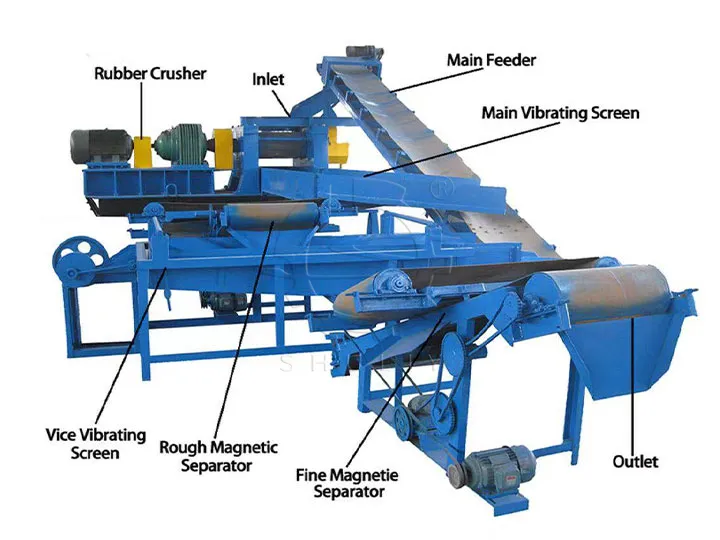
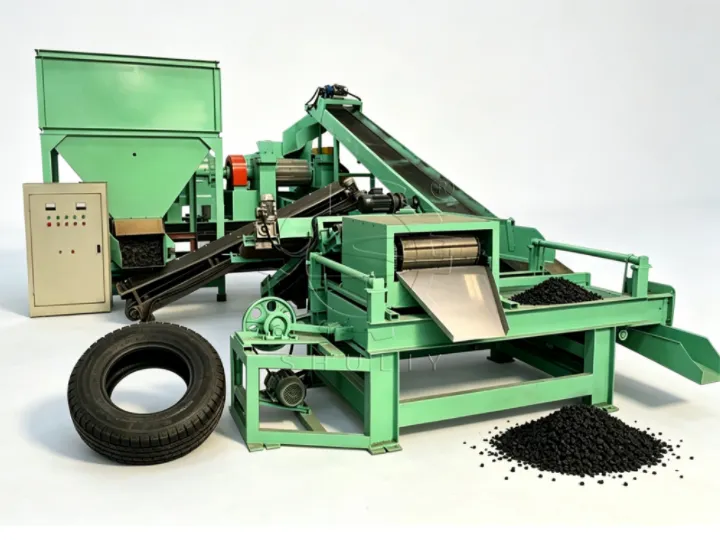
A modern tire grinding system isn’t just one machine; it’s an integrated production line. Each stage is designed for a specific purpose: to purify, grind, and classify the material, ensuring a final product of the highest quality. Here’s how it works:
Step 1: Feeding the System
The process begins after the initial shredding phase. Tire blocks, typically 30-100 mm in size, are loaded onto a conveyor belt. This belt evenly feeds the material into the system, ensuring a steady and efficient workflow.
Step 2: Primary Magnetic Separation (Protecting the Core)
Before grinding, the rubber blocks pass under a powerful over-belt magnetic separator. Its crucial job is to pull out larger pieces of steel wire left over from the shredding stage.
- Why it’s critical: This step protects the main grinder from damage caused by heavy metal contaminants, significantly extending the machine’s lifespan and reducing maintenance costs.
Step 3: The Grinding Stage (The Heart of the Process)
This is where the transformation happens. The steel-free rubber blocks enter the main rubber pulverizer. Inside, high-speed rotating blades and fixed blades work together to cut, shear, and grind the rubber into a fine powder. The entire crumb rubber manufacturing process hinges on the efficiency and power of this stage.
Step 4: Vibrating Screen for Sizing
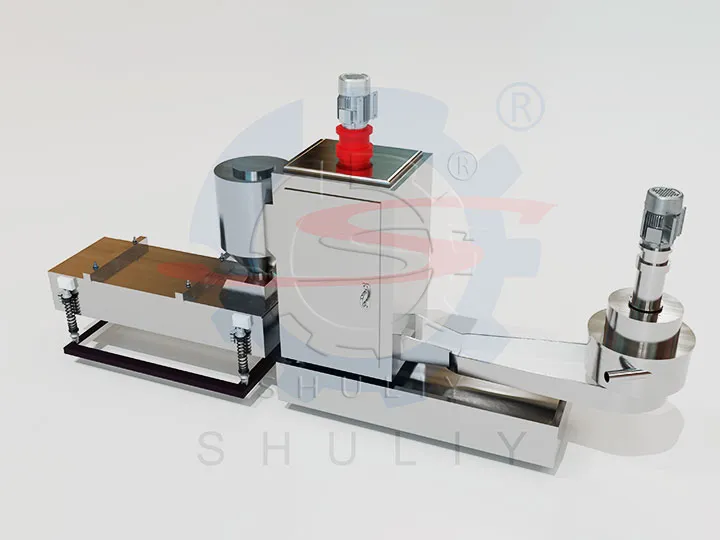
The ground powder is then transported to a multi-layer vibrating screen. This machine acts like a classifier.
- Powder that is fine enough to pass through the set mesh (e.g., 30 mesh) falls to the next stage.
- Powder that is still too coarse is automatically sent back to the grinder for another round of processing. This closed-loop system guarantees a consistent and uniform final product size.
Step 5: Final Magnetic Separation (Ensuring Purity)
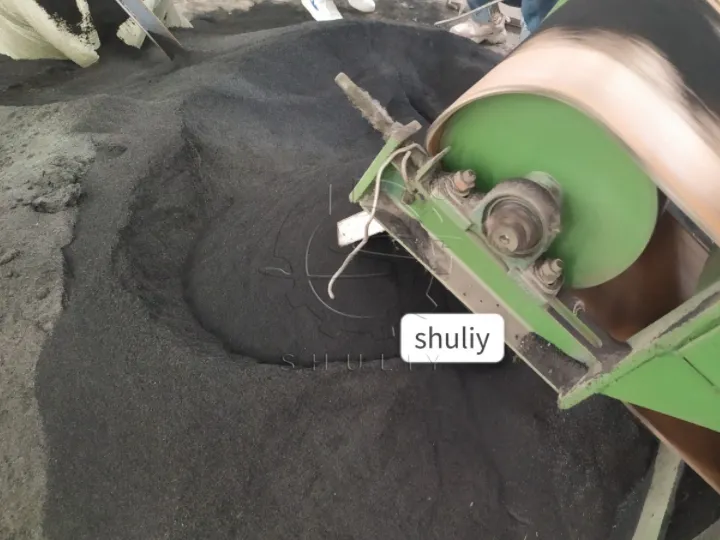
The correctly-sized powder now passes through a final, highly sensitive magnetic separator. This stage is designed to remove the tiniest “hairy” steel wires that might have remained.
- The Shuliy Advantage: Our advanced magnetic separation ensures a rubber powder purity of up to 99% or more, making it suitable for even the most demanding applications like modified asphalt.
(Optional Step 6: Fiber Separation)
For facilities processing a mix of tires, an additional fiber separator can be integrated. This machine uses airflow to effectively remove nylon and textile fibers from the rubber powder, further enhancing its purity.
From Process to Profit
Understanding the crumb rubber manufacturing process makes one thing clear: success depends on a reliable, efficient, and well-integrated system. Each step, from initial magnetic separation to final screening, plays a vital role in determining the quality and value of your end product.
Shuliy Recycling’s Tire Grinding Systems are engineered to optimize this entire process, delivering maximum purity and consistent output with minimal downtime.
Ready to see this process in action? Explore our Tire Grinding Systems or contact our experts to design a production line tailored to your specific needs!