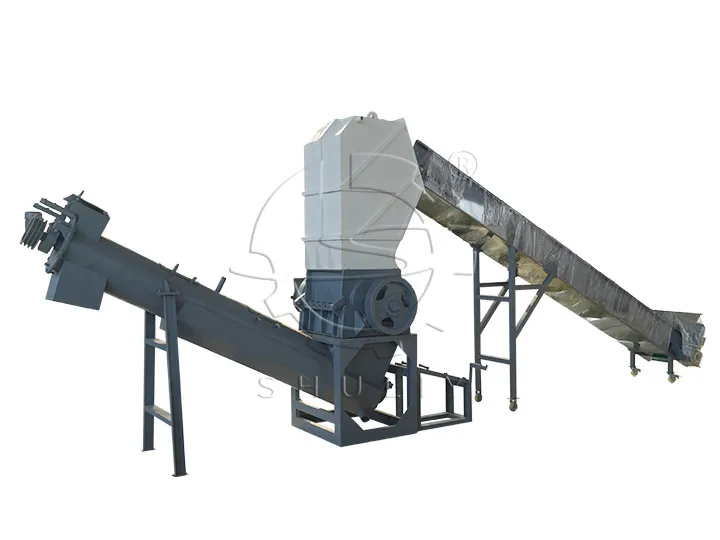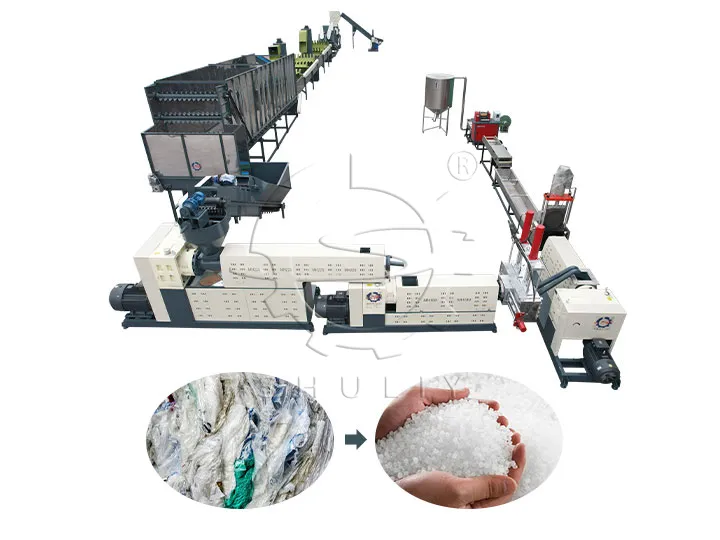
Plastic film recycling looks simple, but in real production, many buyers quickly run into one problem: frequent clogging and unstable output. If you are processing LDPE film, LLDPE film, or agricultural film, choosing the right plastic film pelletizing line is critical.
This guide explains how to run a plastic film pelletizing line efficiently and how to avoid the most common issues—based on actual machine configuration and operation experience.
Why Plastic Film Is Difficult to Pelletize
Unlike rigid plastics, film materials are soft, light, and often contaminated. This creates three typical problems in a plastic film pelletizing line:
- Film wraps around the shafts during feeding
- High moisture after washing affects extrusion
- Dirt and sand block the screen quickly
A standard plastic pelletizing setup designed for rigid plastics will not perform well here. A dedicated plastic film pelletizing line is required.
Key Solution 1: Forced Feeding System (Prevent Wrapping and Bridging)
One of the most important parts of a plastic film pelletizing line is the feeding system. Loose plastic film does not feed smoothly into the extruder. It tends to float, bridge, or get stuck. That’s why a forced feeder with automatic stirring or flipping is essential. In a well-designed plastic film pelletizing line:
- The feeder actively pushes film into the screw
- Automatic agitation prevents material bridging
- Continuous feeding ensures stable extrusion
This significantly improves output stability and reduces downtime. 👉 You can see how this system is integrated in our
plastic film recycling solution
Key Solution 2: Efficient Dewatering Before Pelletizing
Moisture is another major challenge. After washing, the plastic film often contains a large amount of water. If not properly removed, it can cause:
- Steam inside the extruder
- Poor pellet quality
- Increased screen blockage
A reliable plastic film pelletizing line typically includes:
- Vertical dewatering machine (centrifugal type)
- Squeezing or drying system (optional for very wet film)
By reducing moisture before extrusion, the pelletizing process becomes much smoother.
Key Solution 3: Larger Screen Size to Reduce Clogging
Screen blockage is one of the most frustrating issues in any plastic film pelletizing line. Compared to rigid plastics, film processing usually requires:
- Larger screen mesh size
- More frequent impurity discharge
- Optional hydraulic screen changer
This is because film often carries fine contaminants like sand and soil. Choosing the right screen configuration can greatly reduce downtime and improve overall efficiency.
Key Solution 4: Proper Cooling and Pelletizing Method
After extrusion, cooling and pelletizing must match the characteristics of the film material. Common configurations in a plastic film pelletizing line include:
- Strand pelletizing (most common)
- Air cooling + water cooling combination
- Air-blowing storage system (to reduce labor)
A well-balanced cooling system ensures:
- Uniform pellet shape
- No sticking or deformation
- Easier packaging and handling
Final Thoughts
A high-performance plastic film pelletizing line is not just about the extruder. It is a complete system that must address:
- Feeding difficulties
- Moisture control
- Contamination
- Cooling efficiency
If your current line suffers from clogging or unstable output, the issue is usually in these upstream and support systems—not the main machine itself. If you are looking to build or upgrade your plastic pelletizing plant, please contact us for a customized solution!