Many buyers assume that one recycling system can handle all types of plastic. At first glance, using a single machine for both film and rigid materials seems cost-effective. However, in actual production, this idea often leads to unstable output, frequent clogging, and higher maintenance costs.
The main reason is simple: a plastic pelletizing line for film is designed for completely different material behavior compared to rigid plastics such as HDPE, PP, or injection scraps. If the system is not matched to the material, even a well-built machine will not perform efficiently.
Film Materials Require a Different Starting Point
Plastic film behaves very differently from rigid plastics from the beginning of the process.
Film materials are light, soft, and irregular. After washing, they often contain moisture and fine impurities like sand or soil. In contrast, rigid plastics are heavier, more uniform, and easier to handle after crushing.
Because of these characteristics, a plastic pelletizing line for film must solve several issues before extrusion even begins. This is why a standard rigid plastic pelletizing setup cannot be directly applied to film processing.
Feeding Is Where Most Problems Begin
In real projects, feeding is the first major challenge.
If plastic film is fed into the extruder in the same way as rigid flakes, it tends to:
- Float and fail to enter the screw
- Wrap around rotating shafts
- Form bridges that block material flow
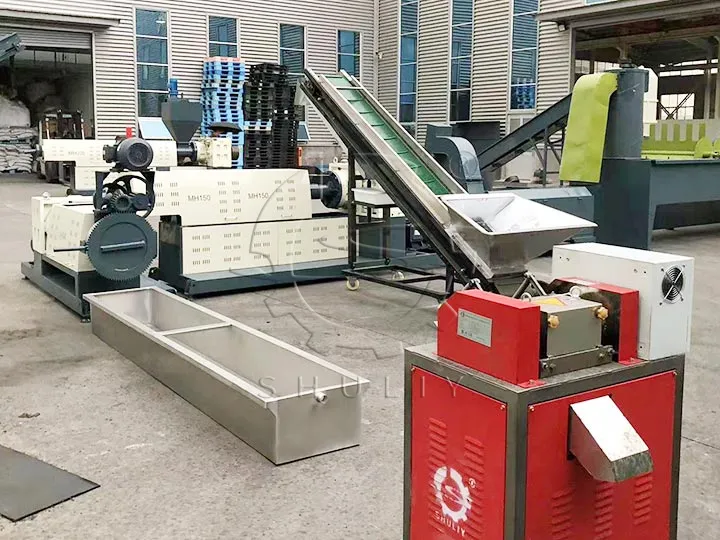
To solve this, every reliable plastic pelletizing line for film is equipped with a forced feeding system. This usually includes automatic stirring or flipping functions that continuously push the material into the extruder.
This design ensures stable feeding and prevents interruptions at the very beginning of the process. In comparison, rigid plastic pelletizing lines do not require such systems because crushed flakes flow naturally.
Filtration Design Must Match the Material
Another key difference lies in the filtration system.
Plastic film, especially post-consumer or agricultural film, often carries contaminants. If a fine screen designed for rigid plastics is used, it will clog quickly and reduce efficiency.
A properly configured plastic pelletizing line for film typically uses:
- Larger screen mesh sizes
- Easier impurity discharge
- Optional hydraulic screen changers for continuous operation
This setup helps maintain stable production and reduces downtime caused by frequent screen cleaning.
Moisture Control Is More Critical for Film
Moisture is often underestimated, but it plays a major role in pellet quality.
After washing, film materials usually retain more water than rigid plastics. If this moisture enters the extrusion stage, it can lead to:
- Steam generation inside the extruder
- Poor melting performance
- Lower pellet quality
For this reason, a plastic pelletizing line for film normally includes a vertical dewatering machine, and in some cases, a squeezing or drying system for heavily contaminated materials. Rigid plastic systems, on the other hand, usually require only basic drying.
Cooling and Pelletizing Also Differ
Once the material is extruded, the cooling and pelletizing methods must also match the material type.
In a typical plastic pelletizing line for film, strand pelletizing combined with air and water cooling is widely used. This helps prevent sticking and ensures uniform pellet shape.
Rigid plastic pelletizing systems are more flexible and may use either strand or water-ring pelletizing, depending on the material and output requirements.
Choosing the Right System Matters More Than Saving Cost
If your raw materials include:
- LDPE film
- Plastic bags
- Agricultural film
Then investing in a dedicated plastic pelletizing line for film is essential for stable operation. If your materials are mainly:
- HDPE bottles
- PP containers
- Hard plastic scraps
Then a rigid plastic pelletizing line will be more suitable. Trying to process both materials in one system often results in higher long-term costs due to inefficiency and maintenance.
Final Thoughts
The difference between film and rigid plastic recycling is not just a detail—it affects the entire system design, from feeding to filtration and drying. A properly designed plastic pelletizing line for film ensures:
- Stable feeding
- Reduced clogging
- Consistent pellet quality
For long-term operation and better return on investment, choosing the right system from the beginning is the smarter decision.